
Kinesio taping
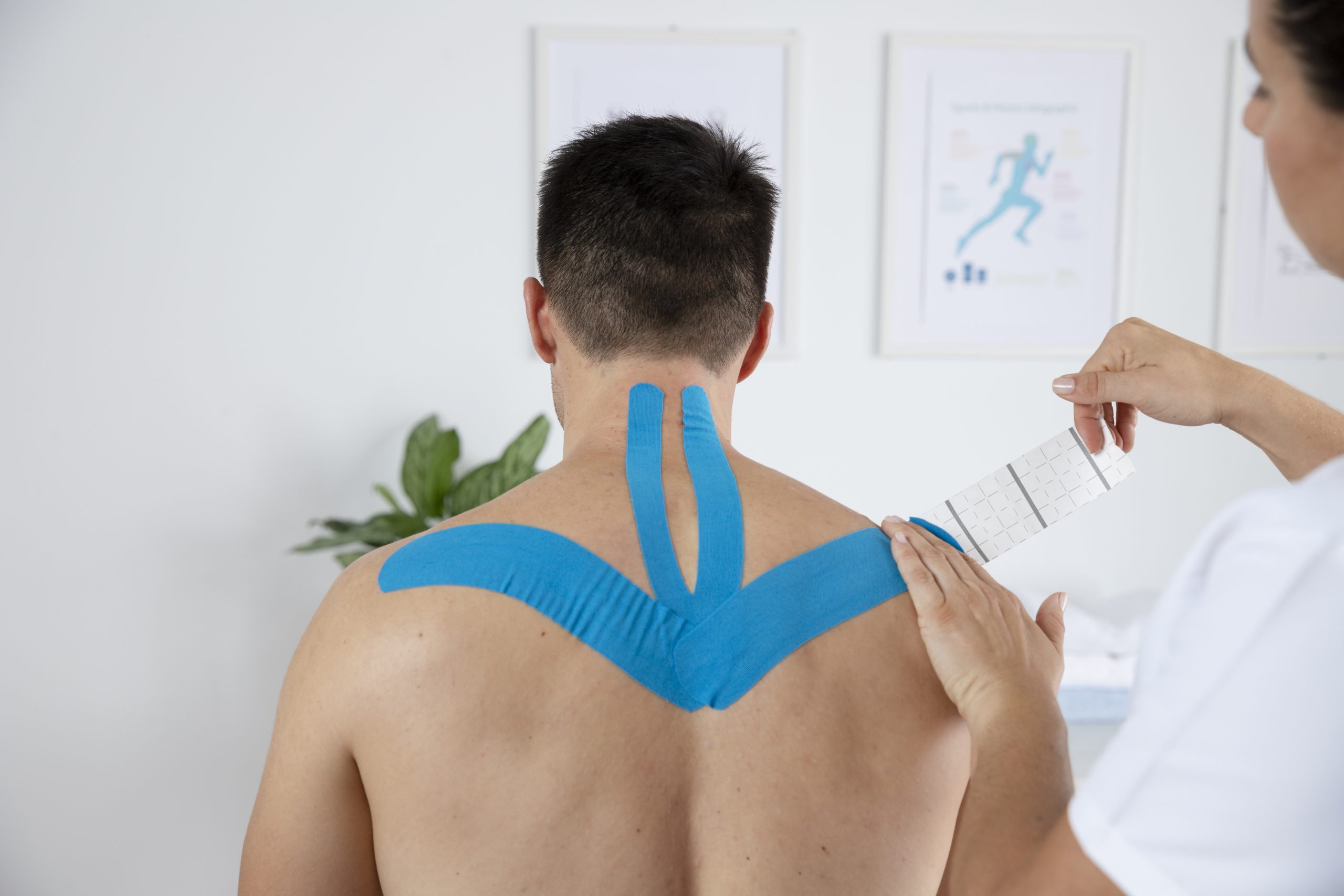
Kinesio taping is a modern method of supporting and treating muscles, joints, and ligaments by applying elastic fabric tapes (kinesio tapes) to the skin. It is used to reduce pain, improve muscle tone, stabilize joints, and accelerate recovery after injuries.
How does kinesiotaping work?
The tape replicates the elasticity of the skin and muscles. After application:
The upper layers of the skin are lifted, which improves blood and lymph circulation
The pressure on the nerve endings decreases – the pain subsides
Joints and muscles are stabilized — but without limiting mobility
A sense of support is created, which reduces overload
Who is it recommended for?

Athletes (for prevention and recovery)
People with chronic back, neck, and knee pain
Patients after injuries or surgeries
For children and adults with posture disorders
For people who lead an active lifestyle and want to reduce muscle fatigue
For office workers and those who spend long periods of time sitting
Main indications
-
 Muscle spasms, overload
-
Sprain, bruise
-
Arthrosis, arthritis, bursitis
-
Posture disorders (scoliosis, hyperkyphosis)
-
Osteochondrosis, headache
-
Pain in the feet, knees, lower back
-
Postoperative rehabilitation
 Muscle spasms, overload
Advantages of the procedure
Safe, non-invasive technique
Does not interfere with activity and does not cause discomfort
Works 24/7 for several days
Has a combined effect: mechanical, neurophysiological and lymphatic drainage
Can be combined with massage, exercise therapy, physiotherapy
Affordable and easy to use — efficiency with minimal time and resource consumption
Contraindications
-
Open wounds, dermatitis, burns
-
Thrombosis, phlebitis, acute infections
-
Allergy to tape
-
Oncology (with caution, only with the permission of a doctor)
-
Systemic connective tissue diseases
 Open wounds, dermatitis, burns
How does the session work?
The procedure begins with a patient examination and assessment of muscle and joint imbalance, after which the specialist selects the appropriate taping technique (for stretching, for support, correction, lymphatic drainage, etc.) and applies the tape, taking into account anatomical features and direction of movement; the tape remains on the skin for 3–5 days, does not interfere with daily activity, and is often combined with other rehabilitation procedures to achieve a comprehensive effect.
Duration: 15–30 minutes.
Recommended course: consists of 4–6 procedures with intervals depending on the patient’s condition and the goals of therapy (acute treatment, prevention or rehabilitation). It is worth noting that the effect is enhanced when combined with exercise therapy, massage or physiotherapy.
Results

Reduction of pain and swelling after the first application
Improving mobility and stabilizing joints
Accelerate the recovery process
Maintaining proper posture
Overall improvement in well-being and comfort when driving
Reducing muscle fatigue and increasing endurance during physical activity