
Traction therapy (cervical/thoracic/lumbar)
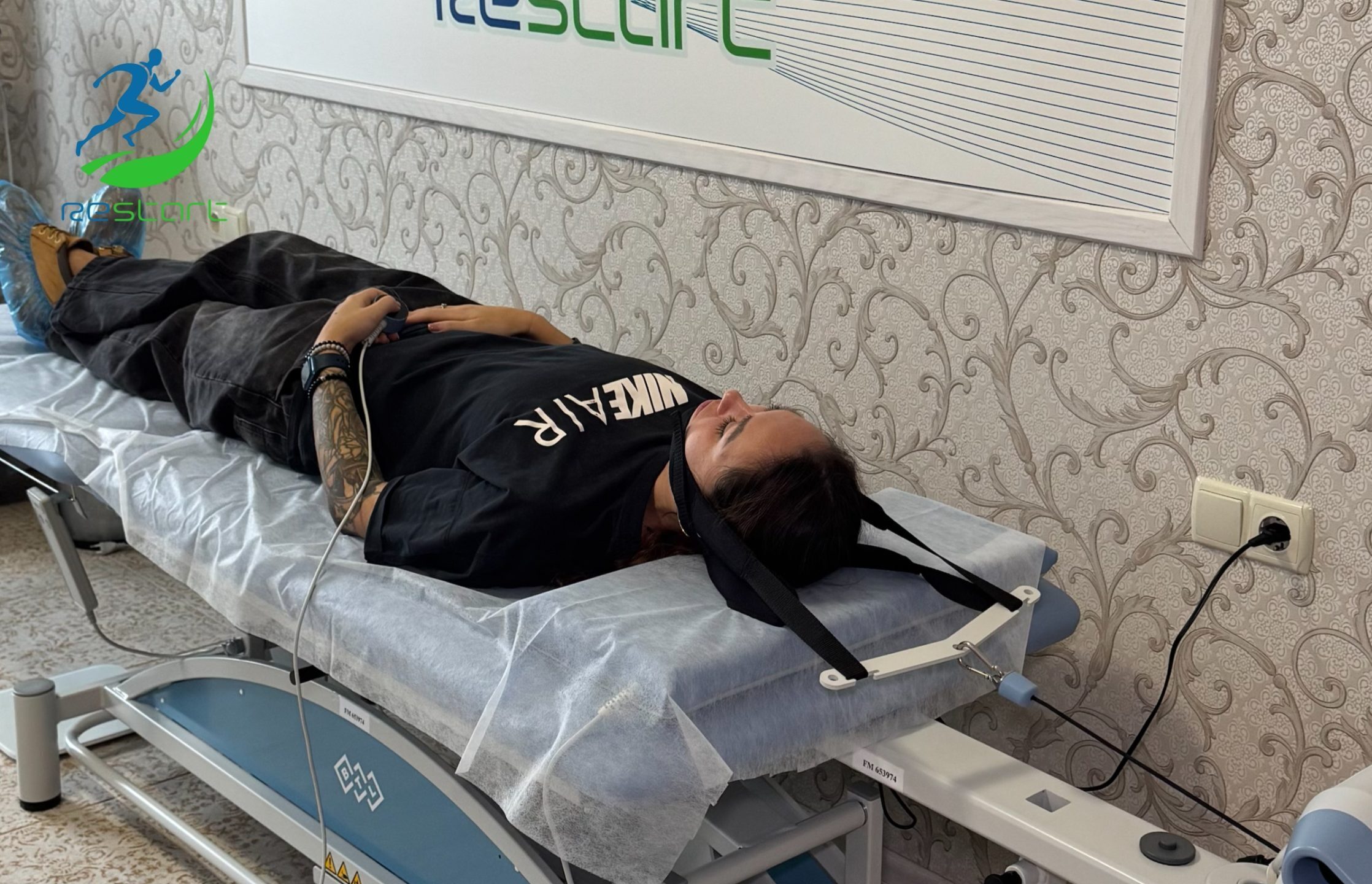
Traction therapy is a method of dosed stretching of the spine or joints, which is used to reduce compression of nerve roots, reduce muscle spasm and improve intervertebral space. It is one of the key areas in kinesiology, vertebrology and rehabilitation for spinal diseases.
How does traction therapy work?

The patient is fixed on a special device for safe extraction
A controlled and dosed stretching of the spine is created
Reduces pressure on the intervertebral discs
Nerve root compression is eliminated
Improves blood circulation and lymph drainage in tissues
Deep back muscles relax
Who is it recommended for?

Patients with chronic back and neck pain
People with intervertebral hernias and protrusions
For people with osteochondrosis and spondylosis
For patients with muscle stiffness and blocks
For people with a sedentary lifestyle
For those undergoing rehabilitation after spinal overload
Main indications
-
 Degenerative changes in intervertebral discs
-
Radiculitis, sciatica, lumbago
-
Nerve compression
-
Myofascial pain syndrome
-
Pain with prolonged sitting or standing
-
Stiffness and limited mobility of the spine
 Degenerative changes in intervertebral discs
Advantages of the procedure
Pain relief without medication
Unloading of intervertebral discs
Improving posture
Relieving muscle tension
Improving spinal mobility
Safe and controlled exposure
Possibility of individual customization
Prevention of complications of osteochondrosis
Lasting effect after a course of treatment
Contraindications
-
Acute hernias with risk of sequestration
-
Severe osteoporosis
-
Oncological lesions of the spine
-
Recent injuries and fractures
-
Infectious diseases of the spine
-
Pregnancy (especially the 2nd–3rd trimester)
 Acute hernias with risk of sequestration
How does the session work?
The session begins with a consultation with a rehabilitation specialist, after which a horizontal or vertical position for stretching is chosen, the body is fixed on the apparatus, and the tension force is gradually increased, so that the patient feels a gentle stretch without pain.
Duration: 20 minutes.
Recommended course: 8–12 procedures (calculated individually for each patient).
Results

Reducing nerve root compression
Pain relief
Relaxation of back and neck muscles
Improving spinal mobility
Partial restoration of disk position
Reducing stiffness of movements
Improving posture
Improving sleep and overall well-being
Increasing the spine’s endurance to loads